There is an old idea about pilgrimage that equates discomfort with devotion. The longer the journey, the harder the conditions, the more austere the accommodation – the purer the spiritual act. It is an idea with genuine roots in religious tradition, and for certain practitioners, it remains meaningful and intentional.
But for the vast majority of people who travel to Ayodhya today – families spanning three generations, urban professionals on a meaningful long weekend, first-time pilgrims who have waited their whole lives for this visit – the discomfort of a poorly chosen hotel does not deepen the spiritual experience. It diminishes it.
A grandmother who did not sleep because the mattress was inadequate is not more devotionally present at the morning aarti. She is exhausted. A child who spent the night in a room without air conditioning in May is not more spiritually open at Ram Mandir. She is uncomfortable and irritable. A family that spent the afternoon managing the logistics of finding a clean, vegetarian meal in an unfamiliar city is not more connected to the experience of Ayodhya. They are depleted.
Comfort, in the context of spiritual travel, is not self-indulgence. It is the foundation that makes genuine presence possible. This is the case for why accommodation matters during a pilgrimage – and why Mosaic Connect Ayodhya was built around exactly this understanding.

The Energy of Spiritual Travel is Different – and It Asks More of You
Anyone who has undertaken a genuine pilgrimage knows that it is physically and emotionally demanding in ways that leisure travel is not. You are not simply sightseeing. You are carrying something – an intention, a devotion, a longing, a memory of someone you came to pray for. The weight of that is real. It does not leave you when you return to your hotel room.
A spiritual trip to Ayodhya involves walking the temple circuit, standing in darshan queues that can run for hours, sitting at the ghats through the evening aarti, moving through crowds with multiple generations of family members at different physical capabilities. By the time the day ends, the body has been asked a great deal. The mind and heart have been asked even more.
Rest, in this context, is not an optional luxury. It is what makes the next day’s devotion possible. A hotel that genuinely restores you – that gives you a bed that works, a room that is cool when it needs to be and warm when it needs to be, a bathroom with reliable hot water for the 5 AM shower before the morning aarti – is not peripheral to the pilgrimage. It is part of what sustains it.
The False Economy of Uncomfortable Accommodation
The logic of choosing the cheapest available room for a pilgrimage trip is understandable. The purpose is devotional, not touristic. Why spend more than necessary on a room when the meaning of the trip lives in the temples and the ghats?
Here is the honest answer: because an inadequate room creates problems that compound across the day in ways that are not immediately obvious when you book it. The hotel that is 45 minutes from Ram Mandir and therefore cheap does not save you money – it costs you two hours of daily travel time, the energy of navigating peak season Ayodhya traffic, and the particular fatigue of arriving at a temple already depleted from the journey.
The hotel without reliable air conditioning does not simply mean a warm room. In Ayodhya’s May or June temperatures, it means a night of poor sleep that degrades everything that follows. The hotel without in-house dining does not just mean an inconvenience. It means daily decision-making about where and what to eat in an unfamiliar city, adding a layer of logistical friction to an itinerary that already has plenty.
The false economy of uncomfortable accommodation is that it appears to save you money on the hotel while costing you something considerably harder to quantify: the quality of the experience you came for.
What Comfort Actually Means in the Context of Ayodhya
Comfort in Ayodhya is not about luxury. It is not about a swimming pool or a rooftop bar or a turn-down service. It is about the specific things that allow a pilgrim to function well across two or three days of spiritually and physically demanding engagement with one of India’s most extraordinary cities.
In practice, comfort for a spiritual traveller in Ayodhya means:
• A location close enough to Ram Mandir and the ghats that the early morning darshan does not require a 45-minute commute before the day has started
• A bed that genuinely rests you – not one that is technically a bed but functionally an endurance exercise
• Air conditioning that holds the room at a temperature that allows sleep, particularly for older family members and young children
• Reliable hot water for the pre-dawn shower before morning aarti – not a negotiation with inconsistent plumbing
• A clean, vegetarian meal available inside the hotel when you return from a long day – so that dinner is not another logistics problem to solve in a city you do not yet know well
• Room configurations that work for the actual group – a family room that genuinely fits a family, not a double room that technically sleeps four with a folding bed that no one is comfortable on
• Professional management that handles peak season smoothly – so that the energy you would have spent managing hotel problems can go toward the experience you came for
None of these is extravagance. All of them are what a pilgrim deserves.

The Specific Case of Multi-Generational Family Pilgrimages
The most common configuration for an Ayodhya pilgrimage is not a solo traveller or a couple. It is a family – often three generations, with grandparents who have waited decades for this visit, parents managing the logistics of the trip, and children experiencing Ayodhya for the first time. Each person in that group has different physical needs, different stamina levels, and a different relationship with what the city means.
For a multi-generational family, the hotel is the one place in the trip where all of those differences can be accommodated simultaneously. The grandmother needs a proper rest in the afternoon – the hotel makes that possible without anyone having to choose between resting and continuing the itinerary. The child needs a meal at an unusual hour – the in-house restaurant makes that available. The parent needs to know that the morning’s early start will not be disrupted by a room that did not deliver what was promised.
Mosaic Connect Ayodhya’s Family Room is specifically designed for this. Not a larger version of a standard double room, but a room whose dimensions, layout, and configuration reflect an understanding of how families with multiple generations actually inhabit a shared space. The air conditioning, the reliable hot water, the in-house vegetarian restaurant, the proximity to Ram Mandir and the ghats – each of these is a practical gift to a family that has come to Ayodhya to experience something profound together.
How Mosaic Connect Ayodhya Is Built for the Spiritual Traveller
Every element of Mosaic Connect Ayodhya’s design reflects an understanding of who comes to Ayodhya and why. This is not a hotel that was built generically and placed in Ayodhya. It is a hotel built for the specific experience of being in this city, for this purpose.
Location
Civil Lines, Ayodhya. 1 km from Ayodhya Cantt Railway Station and 5 km from Maharishi Valmiki International Airport. Ram Mandir, Hanuman Garhi, Kanak Bhawan, and the Saryu ghats all within easy reach. The location gives pilgrims access to the city’s spiritual circuit without the energy cost of a long commute at either end of the day.
Room options
Premium Rooms for solo travellers and couples, Family Rooms for multi-generational groups, and Deluxe Twin Rooms for two adults. Every room includes air conditioning, free high-speed Wi-Fi, a 43-inch TV, mini fridge, tea and coffee maker, hot and cold running water, and a hair dryer. These are not features that exist to impress on a booking platform. They are the practical infrastructure of a comfortable spiritual stay.
Vegetarian dining
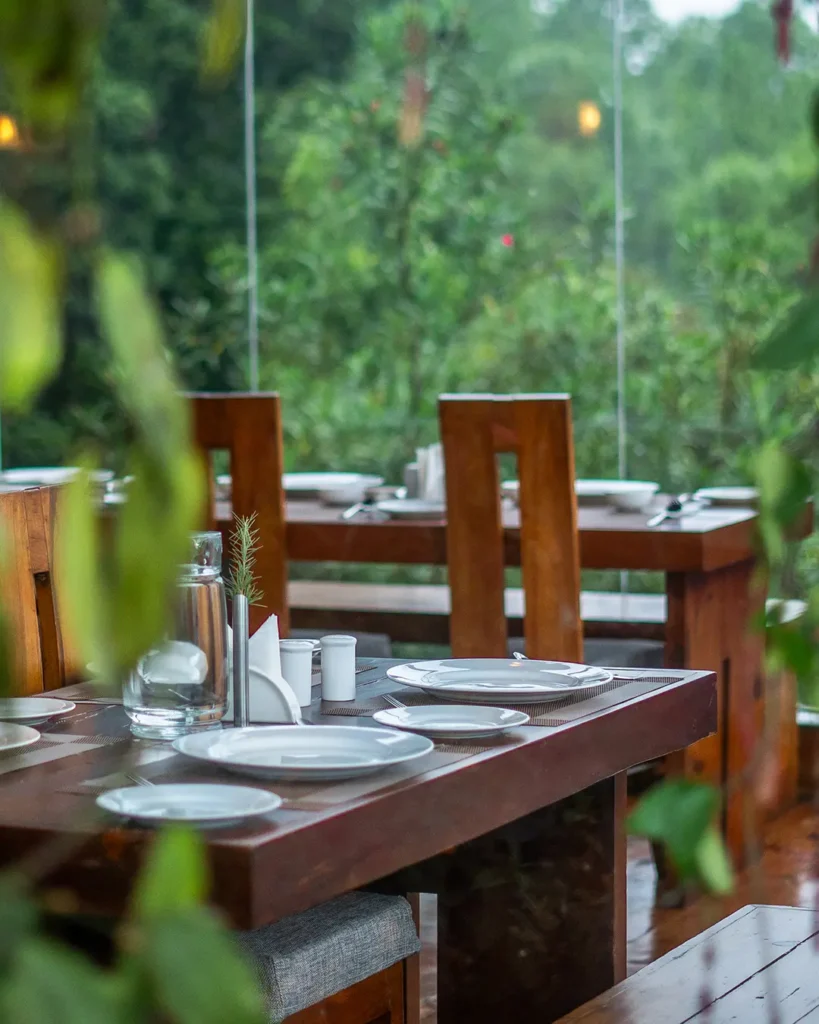
The in-house vegetarian restaurant serves breakfast, lunch, and dinner. Ayodhya is a sattvic city and most pilgrims visiting follow a vegetarian diet. Having a quality vegetarian meal available inside the hotel – at any hour, without searching the city, without uncertainty about preparation standards – is a specific and significant comfort for spiritual travellers.
Design
Contemporary, calm, and uncluttered. Mosaic Connect Ayodhya does not compete with the city’s spiritual character. It provides a counterpoint – a quiet, considered space that restores the traveller between the profound and demanding experiences that Ayodhya offers. The design serves the guest rather than performing for them.

The Spiritual Argument for Booking the Right Hotel
There is, finally, a spiritual argument for comfortable accommodation that goes beyond the practical – and it is simpler than it might initially sound.
Spiritual travel, at its best, is about presence. About arriving at a temple or a ghat with enough inner stillness to actually receive what the place is offering. About being genuinely available to the experience rather than managing the noise of discomfort, fatigue, or logistical stress.
A traveller who slept well, ate well, and arrived at Ram Mandir without a stressful commute is more available to the darshan than one who did not. Not more deserving of it – that is a different conversation. But more present for it. And presence, in a city like Ayodhya, is everything.
The right accommodation is not a concession to comfort over devotion. It is an investment in the quality of the devotion itself.
You Came to Be Present. Choose a Stay That Makes That Possible.
Ayodhya asks something of every visitor. It asks you to slow down, to be still, to be genuinely present in a place that has been holding human devotion for millennia. That is not a small ask. It requires resources – physical, emotional, mental. Those resources are replenished, in part, by where and how you rest.
If you are planning a spiritual trip to Ayodhya, whether for Diwali or Ram Navami, a family pilgrimage or a solo visit, a first darshan or a return – choose your accommodation with the same care and intention that you bring to the trip itself. The right hotel in Ayodhya Uttar Pradesh is the one that gives you everything you need to be fully present for everything the city is waiting to give you.
Mosaic Connect Ayodhya is that hotel. The rest is yours to experience.

Give your pilgrimage the foundation it deserves.
Book directly at Mosaic Connect Ayodhya for the best rates and exclusive direct booking benefits:
• Best price guaranteed online – no OTA markups
• Complimentary breakfast included every morning
• Exclusive F&B discounts on in-house dining
Secure booking. Instant confirmation. Be fully present for everything Ayodhya is waiting to give you.